Yes, when the label means something. The EPA's Safer Choice program reviews every ingredient in a product, regardless of its percentage, against criteria for carcinogenicity, reproductive and developmental toxicity, aquatic toxicity and persistence, and requires the product to perform comparably to conventional ones; nearly 2,000 products carry the label and are audited annually. The American Lung Association's household guidance adds the practical rules: avoid strong fragrances (even citrus can react to form indoor pollutants), never mix bleach with anything containing ammonia, ventilate, and use warm water and soap for most routine jobs. That is how Furball Cleaning chooses what comes into a home with children and animals.
| Point | Details |
|---|---|
| What Safer Choice means | EPA reviews every ingredient against health and environmental criteria, plus performance, pH, packaging and VOC content, with annual audits (EPA). |
| It has to work | Labeled products must perform comparably to conventional products; nearly 2,000 currently qualify (EPA). |
| Fragrance is the catch | Even natural fragrances such as citrus can react to produce dangerous pollutants indoors; avoid air fresheners altogether (ALA). |
| Never mix | Bleach plus any ammonia-containing cleaner releases gases that can cause chronic breathing problems and even death (ALA). |
| Simple works | Warm water and soap often do the job; baking soda scrubs; vinegar and water cleans glass; open the windows (ALA). |
What does the EPA Safer Choice label actually certify?
It is the most rigorous mainstream standard a cleaning product can carry. According to the EPA, Safer Choice reviews every chemical ingredient in a product regardless of its percentage, and each one must meet criteria for human health and the environment, including carcinogenicity, reproductive and developmental toxicity, toxicity to aquatic life and persistence. The review also covers product performance, pH, packaging and volatile organic compound content, and the EPA audits labeled products every year. Nearly 2,000 products currently qualify. The program is voluntary for manufacturers, so a product without the label is not necessarily unsafe, but a product with it has been checked ingredient by ingredient.
Performance is part of the standard: the EPA states that all products must perform comparably to conventional products in their category. That answers the usual objection that green cleaners do not clean. A Safer Choice degreaser has to degrease.
Which cleaning ingredients should a home with kids and pets avoid?
The American Lung Association flags products that release volatile organic compounds (chemicals that vaporize at room temperature), chlorine bleach, ammonia, strong fragrances, irritants and flammable ingredients. The health effects it lists range from eye and throat irritation and headaches to chronic respiratory problems, allergic reactions and occupational asthma, and children and animals are smaller and closer to the floor where residues sit.
Its single firmest rule: never mix bleach or any bleach-containing product with any cleaner containing ammonia; the gases can lead to chronic breathing problems and even death. Its subtler point is about fragrance: even natural fragrances such as citrus can react to produce dangerous pollutants indoors, which is why the ALA says to avoid air fresheners altogether and why a home that smells strongly of a cleaner is not necessarily a clean home.
| Avoid or minimize | Why | Safer alternative |
|---|---|---|
| Chlorine bleach for routine cleaning | VOCs and toxic substances; dangerous when mixed with ammonia (ALA) | Soap and water for routine cleaning; disinfect only when someone is sick (CDC) |
| Ammonia cleaners | Irritant; never combine with bleach (ALA) | Vinegar and water for glass (ALA) |
| Fragranced sprays and air fresheners | Fragrances, even citrus, react to form indoor pollutants (ALA) | Ventilation; fragrance-free or Safer Choice-labeled products (EPA) |
| Abrasive chemical scrubs | Irritants, corrosives (ALA) | Baking soda for scrubbing (ALA) |
| Products used in closed rooms | VOC build-up; headaches, irritation (ALA) | Open windows and doors while cleaning (ALA) |
Do eco-friendly cleaners work on real dirt?
On the kitchen and bathroom jobs that make up most of a clean, yes, provided you let them work and scrub. Greasy range hoods, soap scum and grout respond to dwell time and agitation more than to harsher chemistry; the deep-clean items on our list are done with eco-friendly degreasers, baking soda and effort rather than caustic sprays. The one place to be honest is heavy disinfection: when someone in the home is sick, the CDC's guidance is to clean first and then use an EPA-registered disinfectant for the full contact time with the room ventilated, and we do that when asked.
How should a cleaning company choose products for your home?
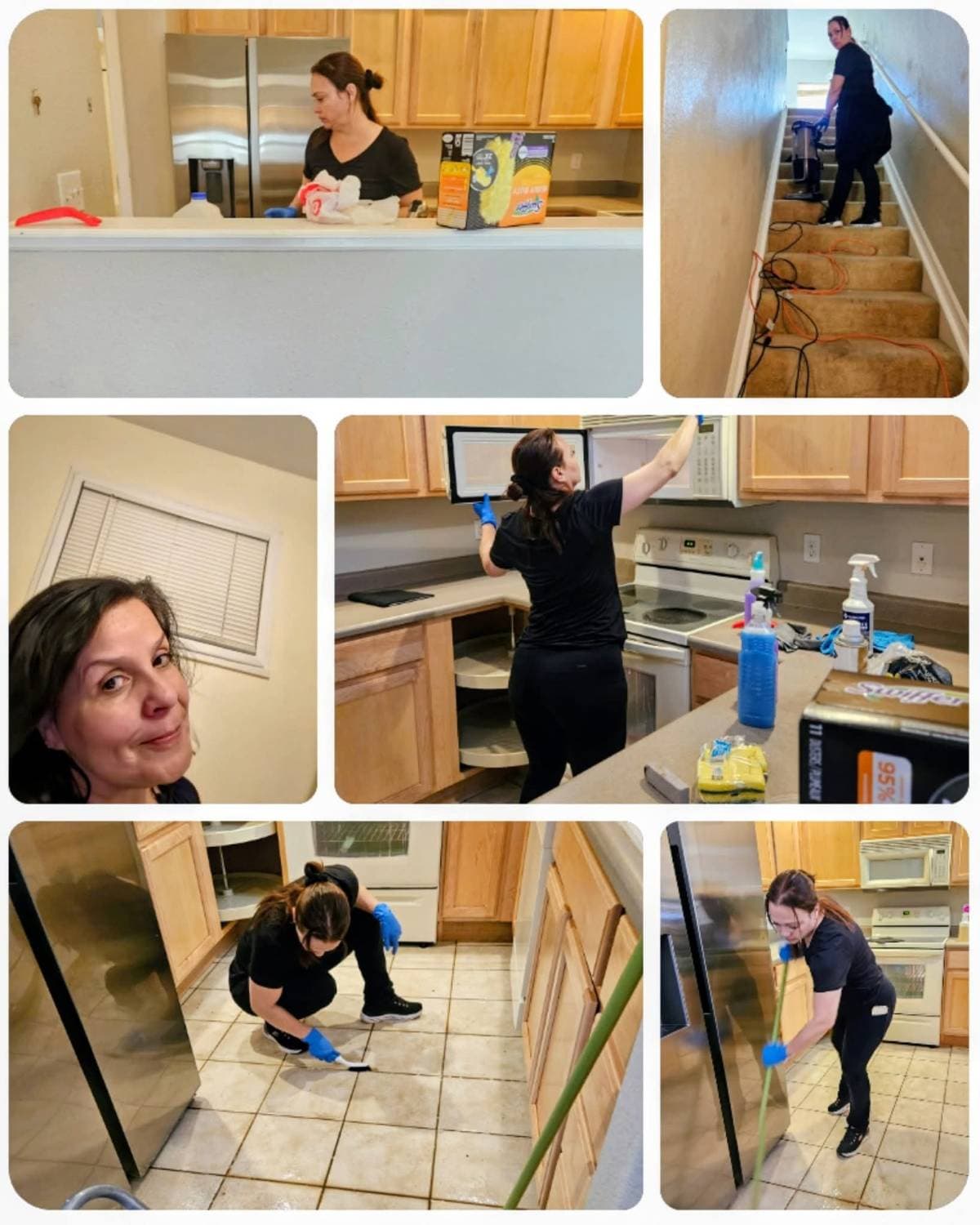
Ask three questions before you hand over a key: what products do you use, can you use mine, and do you open the windows? A good answer names the products and why, says yes to yours, and treats ventilation as part of the job. Furball Cleaning uses eco-friendly, non-toxic products as the default in every home, switches to a client's preferred product on request, and keeps fragrance low because a clean home should smell like nothing. A Sloan's Lake client with two dogs told us the products were the reason she chose us; an Arvada client told us the reason she stayed was feeling comfortable having us there.
From Marina
I chose non-toxic products before it was a selling point, because I am the one breathing them all day in other people's kitchens. The sources above say what I have seen for years: the smell of a cleaner is not the clean, and the strong stuff is mostly for show. Soap, water, a good degreaser, baking soda where it needs scrubbing, and windows open.
If anyone in your home has asthma, allergies or sensitivities, or you have a product you trust, tell me when you book and I will work with it. Call or text (720) 985-4648 for a free quote.
Furball Cleaning · Denver Metro and West Denver · Any day, any hour
Frequently asked questions
What does the Safer Choice label mean on a cleaning product?
That the EPA has reviewed every ingredient in the product, regardless of percentage, against criteria for human health and the environment, including carcinogenicity, reproductive and developmental toxicity, aquatic toxicity and persistence, and that the product performs comparably to conventional products. Nearly 2,000 products carry the label and are audited annually.
Is it safe to mix bleach and other cleaners?
No. The American Lung Association warns never to mix bleach or any bleach-containing product with any cleaner containing ammonia; the gases can cause chronic breathing problems and even death. Use one product at a time and ventilate.
Are scented cleaners bad for indoor air?
They can be. The American Lung Association notes that even natural fragrances such as citrus can react to produce dangerous pollutants indoors, and recommends avoiding air fresheners altogether. A clean home does not need to smell like anything.
What products does Furball Cleaning use?
Eco-friendly, non-toxic products that are safe around children, pets and people with sensitivities, with low fragrance and the windows open while we work. If you prefer a specific product of your own, leave it out and tell us.